AI comes of age
It was only in December that the US’ National Aeronautics and Space Administration (Nasa) announced that a solar system with as many planets as our own had been discovered with the help of its Kepler space telescope and AI.
Closer home, Microsoft and the International Crops Research Institute for the Semi-Arid Tropics are using an AI-based sowing app that is expected to help about 4,000 farmers in Andhra Pradesh and Karnataka during the kharif season. HDFC Bank’s AI chatbot Eva, built by Senseforth AI Research, now works with the Google Assistant in Indian English. It has already answered more than five million user queries with more than 85% accuracy, according to the bank.
These are simply cases in point across sectors to demonstrate that the world of AI, which is broadly defined as the desire to replicate human intelligence in machines, has matured greatly.
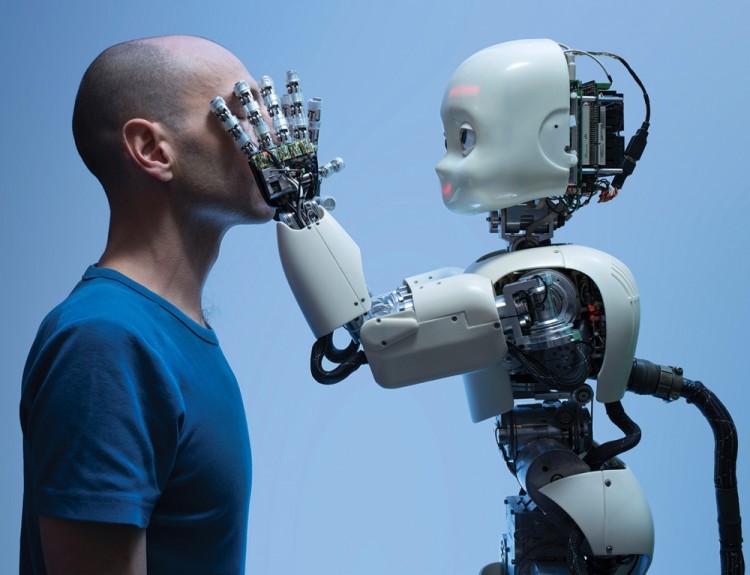
There are three broad reasons for AI’s phenomenal growth in the last two-three years. First is the rapid advancement in machine- and deep-learning algorithms. Second is the availability of humongous amounts of data (hence known as Big Data) on which these algorithms can be trained. Third is the dramatic increase in computing power that includes more efficient computer processing units and graphic processing units.
The results are visible. In December, Alphabet-owned AI firm DeepMind announced that its AlphaZero algorithm took just 4 hours to learn all chess rules and defeat the world’s strongest open-source chess engine, Stockfish. AlphaZero, which was modelled on DeepMind’s AlphaGo Zero computer programme, vanquished a world-champion programme in each game of chess, shogi (Japanese chess) and the Chinese game, Go, within 24 hours.
Since automation and AI are better than humans with routine tasks, it has understandably given rise to the fear that automation and AI will take away our jobs and become more intelligent than human beings. In his 2006 book, The Singularity Is Near: When Humans Transcend Biology, American author and futurist Ray Kurzweil forecast that AI would surpass humans. By 2099, he added, machines would have attained a legal status equal to that of humans.
Technology luminaries, including Bill Gates, Elon Musk and even Stephen Hawking, have expressed fear that robots with AI could rule mankind. Those who believe that AI machines can be controlled include Mark Zuckerberg and Kurzweil.
The fact is that despite the advancements in AI, it is still nothing like what we see in sci-fi movies. The benefits, though, include smart personal assistants, AI-powered chatbots, better search engines, more efficient translation tools, driverless cars and trucks, and predictive healthcare. Research released by Accenture Plc. also reveals that AI could add $957 billion, or Rs60,68,150 crore, to the Indian economy by changing the nature of work to create better outcomes for businesses and society.
So though it may be difficult to predict how AI will affect us 25-30 years from now, we may want to sharpen our focus on the many positives it has introduced so far.

 ADDITIONAL KNOWLEDGE
Leave a comment